GFCI and AFCI sound alike and both trip to cut power, but they protect against different dangers. Most modern homes need both, in different places.
GFCI: protects people from shock
A ground-fault circuit interrupter compares the current going out on the hot wire with the current coming back on the neutral. If even a small amount is missing, it may be flowing through a person to ground, so the GFCI cuts power in a fraction of a second. That’s why GFCIs are required where water and electricity can meet.
Under recent editions of the National Electrical Code, GFCI protection is typically required for outlets in locations such as bathrooms, kitchens, garages, outdoors, laundry areas, unfinished basements, crawl spaces and near sinks. The exact list depends on which code edition your area has adopted.
AFCI: protects the house from fire
An arc-fault circuit interrupter watches for the electrical signature of dangerous arcing, the kind caused by a damaged cord, a nail through a cable or a loose connection. Arcs can heat surrounding material enough to start a fire, often inside a wall. An AFCI shuts the circuit off before that happens.
In new construction and many renovations, recent code editions require AFCI protection for most living areas, such as bedrooms, living rooms, hallways, closets and, in many cases, kitchens and laundry rooms. Again, local adoption varies.
Side by side
| GFCI | AFCI | |
|---|---|---|
| Protects against | Electric shock | Electrical fires from arcing |
| Typical locations | Wet and damp areas | Living areas and bedrooms |
| Available as | Outlet or breaker | Breaker or outlet |
Dual-function breakers combine both protections in one device, which is handy for circuits that need both, such as kitchens and laundry rooms.
Test them every month
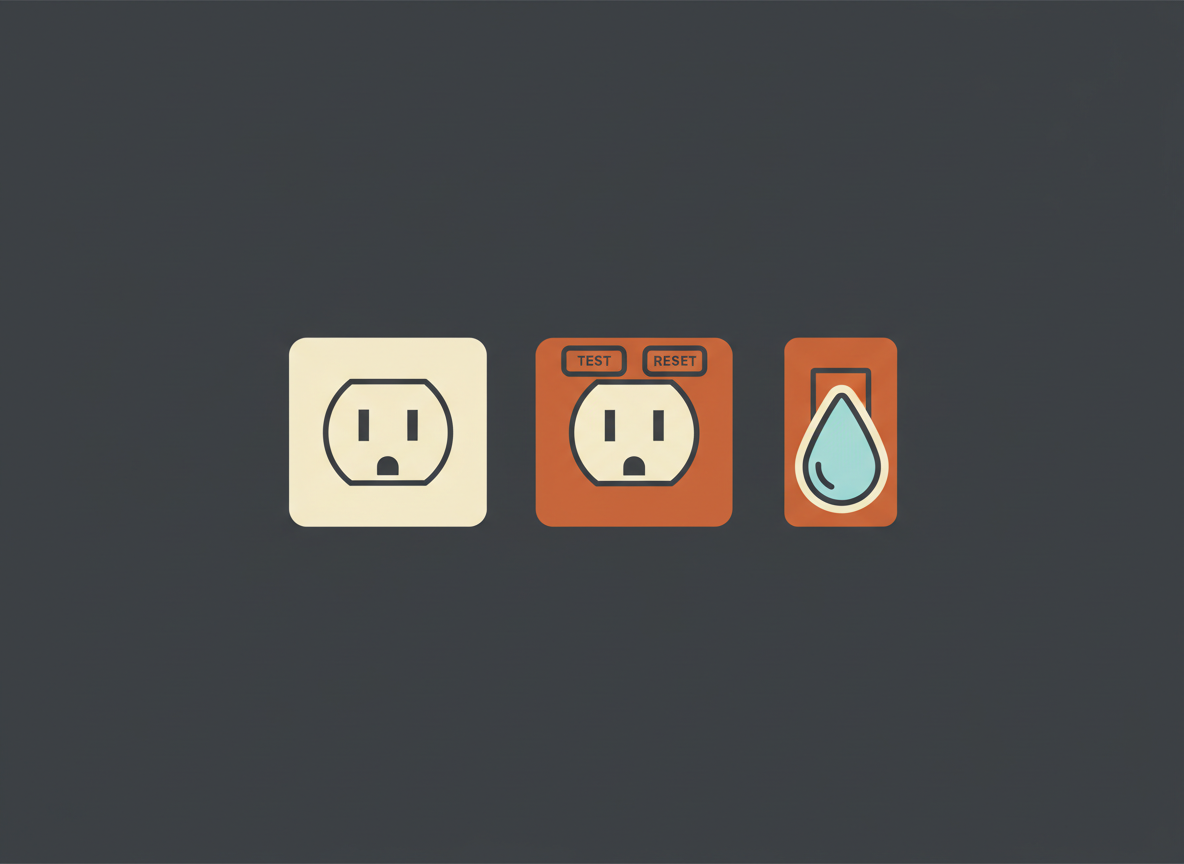
Press the TEST button on each GFCI outlet or breaker: the power should cut off. Press RESET to restore it. AFCI breakers have a test button too. If a device doesn’t trip when tested, have it replaced.
What if one keeps tripping?
Frequent trips are a warning, not an annoyance. A GFCI that trips often may indicate moisture or a faulty appliance; an AFCI may be detecting a damaged cord or loose connection. Unplug devices one at a time to find the cause, and call an electrician if the problem continues. See DIY or call an electrician?
Key takeaways
- GFCI = shock protection, mainly in wet areas.
- AFCI = fire protection, mainly in living areas.
- Test both monthly, and don’t ignore repeated trips.